

premium seawalls
Seawall Construction
A properly designed seawall is one of the most important investments a waterfront property owner can make. Seawalls help stabilize shorelines, prevent erosion, protect structures from water intrusion, and preserve valuable waterfront property for decades to come.
At Dellefave Contracting, we primarily construct seawalls using fiberglass-reinforced vinyl sheet pile systems, a modern solution known for its exceptional strength, durability, and resistance to rot, corrosion, marine borers, and harsh environmental conditions.
How Seawalls Work
A seawall acts as a retaining structure that holds back soil while protecting the shoreline from waves, fluctuating water levels, boat wakes, and storm events. Without proper shoreline protection, erosion can gradually wash away land, compromise landscaping, and threaten nearby structures.
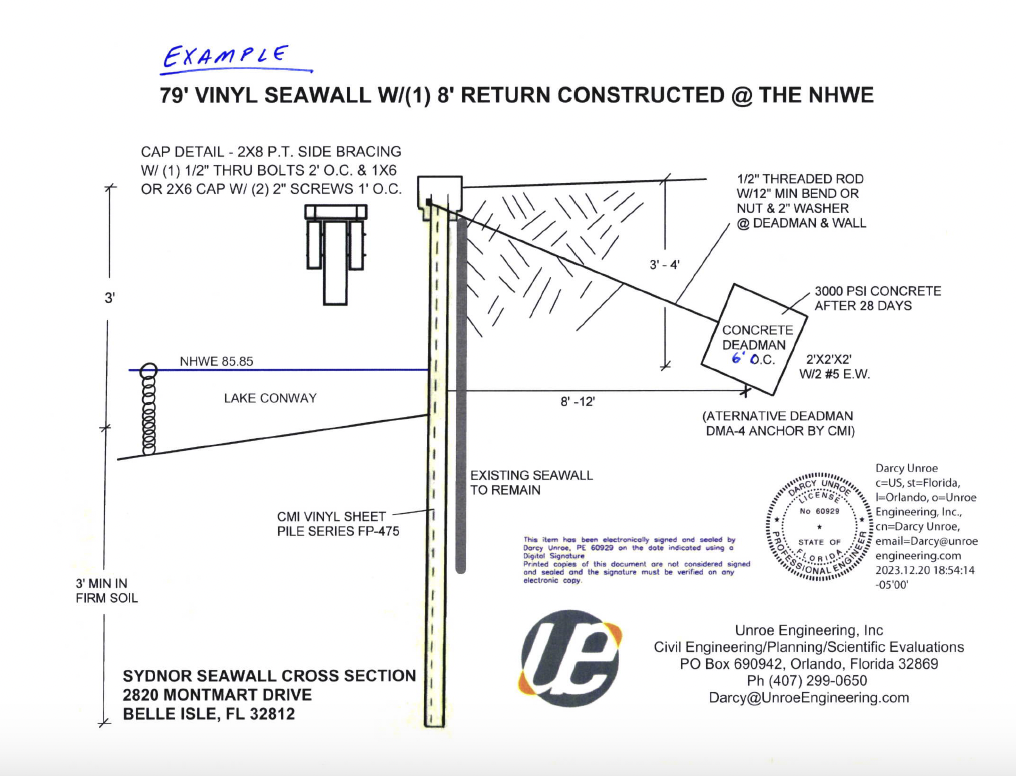
To ensure long-term stability, seawall panels are driven deep into the ground. A common rule of thumb is a 1:1 ratio, meaning the portion of the seawall installed below ground is approximately equal to the height exposed above ground. This buried section creates the resistance necessary to withstand soil pressure and water forces over time.
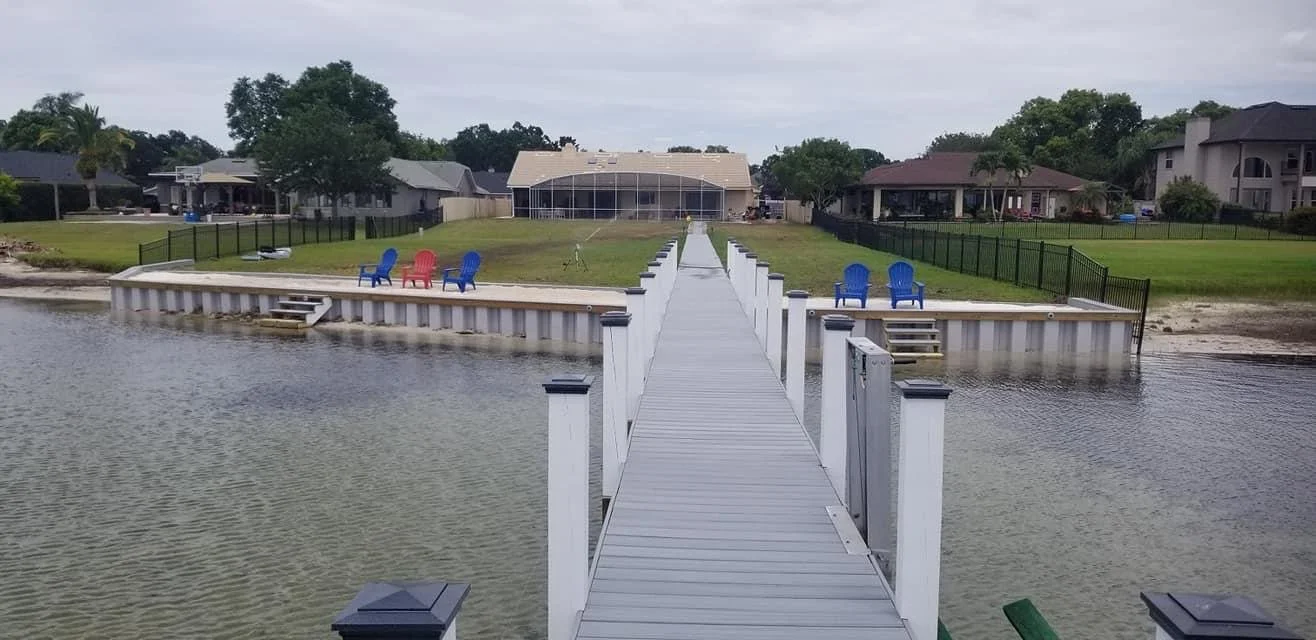
Seawall Finishes & Cap Options
While the structural wall itself is typically constructed from fiberglass-reinforced vinyl sheet pile, the finished appearance can be customized to complement your property.
Popular finish options include:
Composite decking caps
Pressure-treated wood caps
Reinforced concrete caps
Decorative concrete finishes
Custom materials to match existing docks, boathouses, and waterfront features

Deadman Anchors
In many seawall installations, additional reinforcement is required in the form of deadman anchors.
Deadman anchors are buried anchor systems installed landward of the seawall and connected to the wall using tie rods. Their purpose is to help resist the pressure exerted by retained soil and prevent the seawall from leaning, bowing, or failing over time.
Deadman anchors may be recommended when:
The seawall is retaining a significant amount of fill material.
Existing walls show signs of leaning or movement.
Poor soil conditions exist behind the seawall.
Additional structural support is required by engineering specifications.
Replacing an aging seawall that previously utilized anchor systems.
We evaluate each property to determine whether deadman anchors are necessary.
hardscapes
Hardscapes provide beautiful contrast to natural vegetation, featuring elements like rocks, walkways, paths, and sanded areas. These additions reduce maintenance and water usage while enhancing the overall landscape. Hardscapes can also be designed for recreational activities, such as sand volleyball courts, making them both functional and visually striking additions to any outdoor space


built for florida’s climate
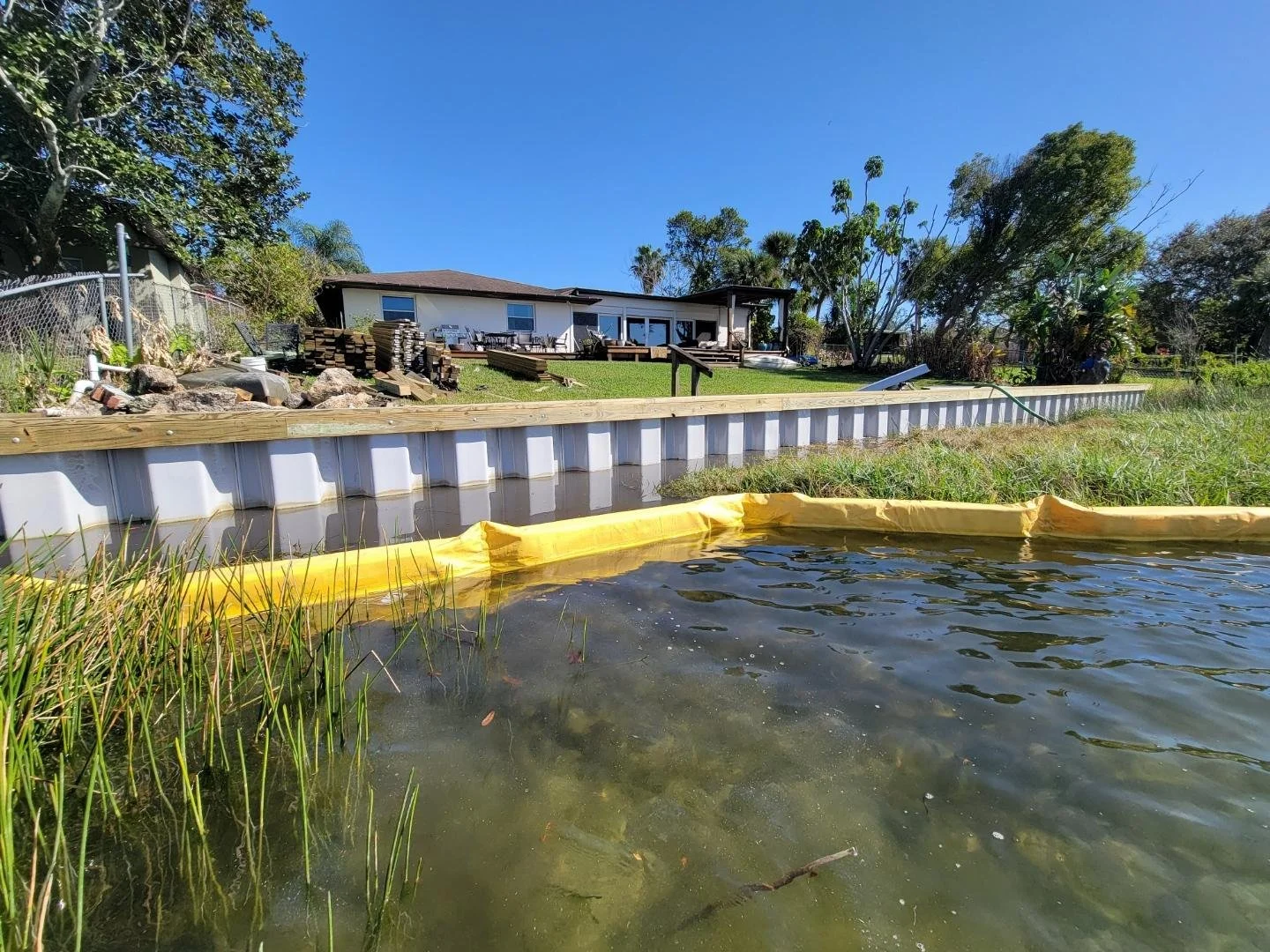
Our seawalls are designed to withstand Florida's unique environmental challenges, including changing water levels, heavy rainfall, boat traffic, and storm events. By combining quality materials, proper installation techniques, and sound engineering principles, we build seawalls that provide long-term shoreline protection while enhancing the appearance and value of your waterfront property.
Whether you're replacing a failing seawall or protecting a newly developed shoreline, our team can help design a solution that fits your property's needs and aesthetic goals.
take the Next step
Request Quote Below
